
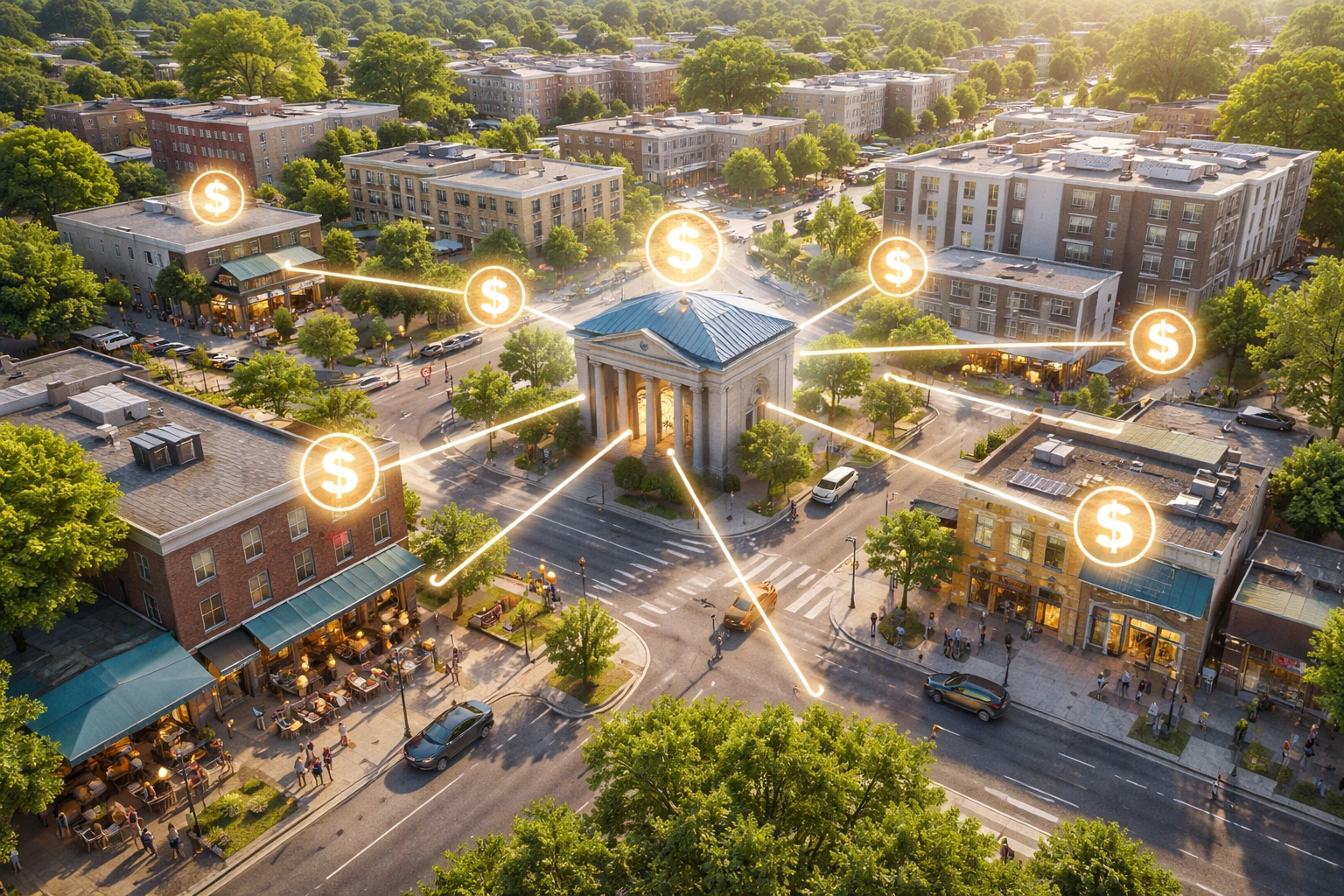
Banks shape social change through every loan they approve or deny. And where that money lands can build up a neighborhood or drain it dry. The problem is, most people never think to ask where their deposits go.
Still, plenty of Americans love the idea of ethical banking, but how can you tell which banks actually follow through on their promises? That’s the hard part.
Fortunately, social lending puts money where it’s needed most, and finding the right bank is easier than you’d think (and honestly, once you know what to look for, no deep research required).
In this guide, we’ll walk you through how lending decisions shape society, what ethical banking options look like, and how to spot a bank that truly cares. You’ll know exactly where your money goes while still getting the services you need.
Stay with us to learn how it all works.
What Is Social Lending Impact and How Does It Work?
Social lending impact is the measurable difference a bank’s lending decisions make in communities.
Think of it as cause and effect. When a bank approves a loan in a low-income area, that money works. It creates jobs, builds homes, and lifts families. But when banks skip those areas, nothing changes.
The next few sections show you how this plays out.
How Banks Direct Funds to Underserved Communities

Banks direct funds to underserved communities through targeted programs and local partnerships. Some banks work with nonprofits to reach borrowers who don’t fit typical lending criteria.
Others set up branches in low-income neighborhoods or create loan products with easier repayment options. The result? Capital finally reaches places that traditional banks often pass over.
And when that money finally arrives, it opens doors for families and local businesses that would otherwise have no access.
The Link Between Lending Decisions and Local Growth
When banks lend locally, that money doesn’t disappear. It circulates, fuels employment, and helps neighborhoods grow stronger over time.
Take small business loans, for example. A single loan can help a bakery open in Detroit or a repair shop launch in rural Tennessee. But large corporations often skip these areas because the profit margins are too small.
Affordable housing loans work the same way. They help families build wealth and stay rooted in their communities for generations.
Why Some Borrowers Get Overlooked by Traditional Loans
Traditional banks rely on credit scores and income thresholds, so borrowers who don’t fit the mold get shut out. Marginalized communities face even higher denial rates (and yes, we’ve watched promising applications tank over minor paperwork).
So without ethical lending alternatives, many borrowers get left behind, and the gap keeps getting wider. But it doesn’t have to stay that way.
Can Banks Drive Meaningful Social Change?
Yes, and some already are. You can see it in banks that back underserved neighborhoods, clean energy projects, and first-time entrepreneurs. Their lending proves that loans can do more than turn a profit.
We’ll show you three ways this is happening right now.
1. Community Development Financial Institutions Explained
CDFIs are mission-driven lenders certified by the CDFI Fund. They focus on borrowers that traditional banks often overlook. So how do they pull it off?
For starters, they offer flexible terms and lower barriers for people in underserved areas. Many also follow ethical practices tied to human rights and social justice.
This approach is paying off. CDFIs like Beneficial State Bank continue to expand, supported by an industry that has tripled its total assets to more than $450 billion between 2018 and 2023.
2. Green Loans and Their Growing Role

Some banks now offer products specifically for eco-friendly projects like solar panels, energy upgrades, and sustainable buildings. These are called green loans, and they often don’t come with a heavy price tag upfront.
But saving money isn’t the only benefit. Ethical lenders have shown us that green loans also lower environmental risks. They steer money away from fossil fuels and into cleaner projects.
Borrowers are catching on, too. More now want their money tied to environmental sustainability and renewable energy goals.
3. Microloans That Reach Small Business Owners
Not every entrepreneur fits the mold that traditional banks want. Microloans fill that gap with small loans, usually under $50,000, designed for borrowers who can’t qualify elsewhere. Think food truck owners in Austin or seamstresses in Atlanta.
The reason they can get funded at all? Microloans don’t demand perfect credit or years of business history. After working with community-focused lenders, we’ve found they meet people where they are instead of where banks wish they were.
The impact goes beyond one business. When a $10,000 loan takes a side hustle from garage to storefront, it creates jobs and keeps money circulating in the same neighborhood.
How Do You Spot a Bank That Puts People First?
Look at what they publish, what they say when you push back, and how they show up in the neighborhoods they claim to serve. A people-first bank proves it in three places: their reports, their answers, and their actions.
We’ll break down each one below.
Transparency Reports and What They Reveal
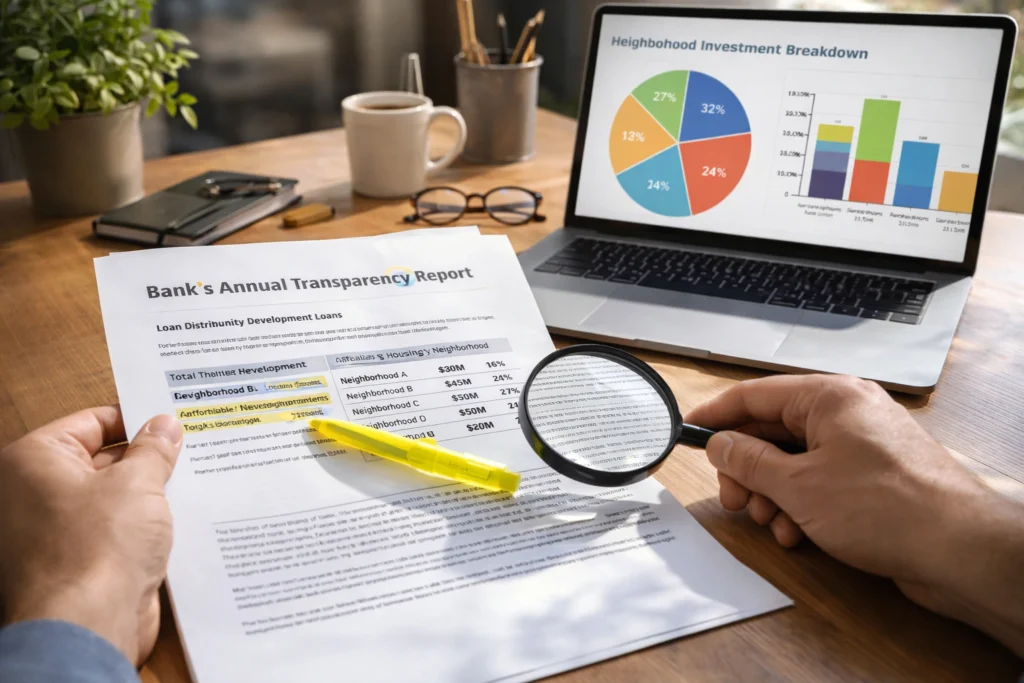
A transparency report is a public document showing where a bank lends its money. Most reports break down loans by neighborhood, income bracket, and loan type.
The trick is comparing what a bank says to where its money actually goes. If it claims to support small businesses but most loans go to corporations, the report shows that gap. Same with lending in underserved areas versus wealthy zip codes.
Of course, not every bank publishes one. If yours doesn’t, ask why.
Questions Worth Asking Before You Choose
Numbers in a report only tell part of the story. Sometimes you need to ask the bank directly, and the right questions cut through marketing fast.
Before opening an account, get answers to these:
- Where does my deposit money get invested?
- Do you fund oil and gas projects or private prisons?
- What percentage of your loans go to underserved communities?
Asking upfront keeps your money from funding practices that clash with your values. A bank with nothing to hide will answer clearly, but from what we’ve found, the ones that stumble or dodge usually aren’t telling you everything.
Signs a Bank Genuinely Supports Its Community
Look for banks with board members who actually live in the communities they serve. That’s a strong indicator that their decisions reflect local needs.
Their products should show the same commitment. And low-minimum savings accounts or first-time homebuyer programs signal that a bank is serious about expanding access.
Of course, not every bank with a “community-focused” label earns it. The pretenders are easier to spot than you’d think. They may sponsor a local baseball team for publicity, but still refuse to lend in that same zip code, while real community banks put capital behind their words.
Your Money, Your Values: What Comes Next?
Banks hold a substantial amount of influence over where money flows. Too many banks still bypass underserved communities while talking up social responsibility. But ethical alternatives exist, and choosing them gets easier with solid information.
We covered how lending decisions shape neighborhoods and explored CDFIs, green loans, and microloans reaching small business owners. Now you have the tools to find a bank that follows through: check their reports and ask the right questions.
Ready to align your banking with your values? The Social Investment Taskforce helps you find institutions that put communities first. Reach out today.