


Investors measure real impact by tracking ESG metrics tied to actual outcomes, not marketing claims. It sounds straightforward, but knowing which metrics to use and how to track them takes the right approach. This guide breaks down exactly how to do that step by step.
We’ll show you how to collect reliable data, evaluate performance, and verify your money creates genuine change. You’ll also learn data collection methods, tracking techniques, and evaluation frameworks that actually work.
There’s no room for guessing anymore. With a $4 trillion gap in sustainable development investments still looming worldwide, hoping your capital lands in the right place is no longer good enough. So if you want to invest with confidence and prove your dollars drive real results, read on to learn how impact measurement works the right way.
What Does Impact Measurement Involve?
Impact measurement involves monitoring ESG data and performance over time. At its core, ESG covers environmental, social, and governance factors that show whether your investments produce actual change. Without tracking these areas, you can’t validate that your portfolio moves the needle.
The sections below break down the building blocks you need to get started.
ESG Metrics: The Building Blocks of Real Results
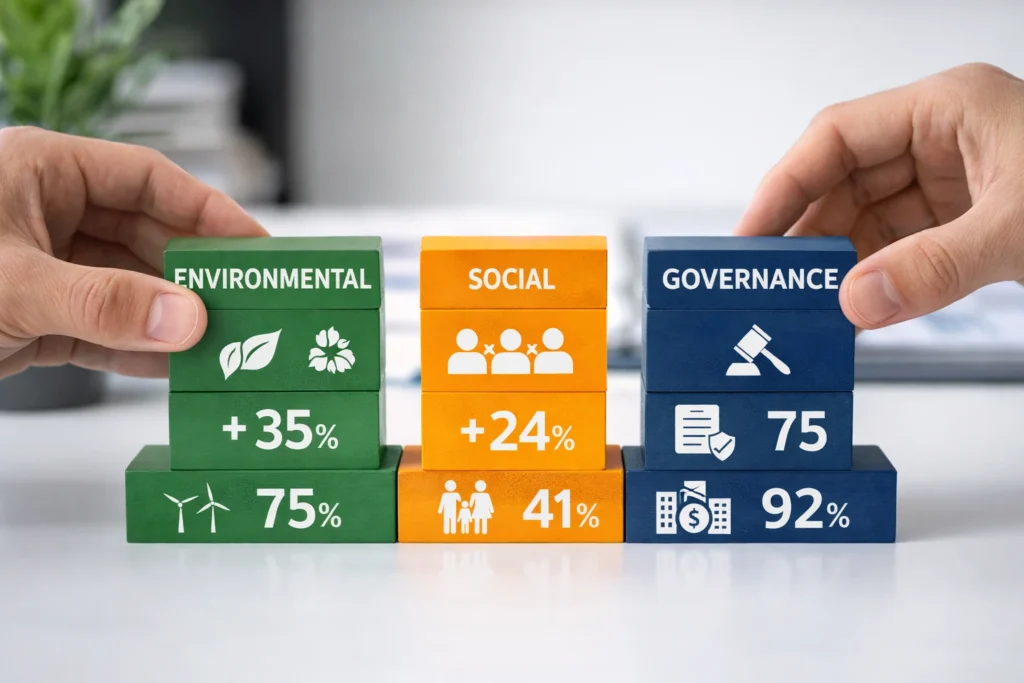
ESG metrics show if your dollars lead to measurable progress. Leave them out, and you lose sight of tangible improvements entirely.
These ESG metrics combine quantitative and qualitative scores covering carbon output, labor practices, and board diversity. From there, you can compare how companies perform across your holdings.
That said, even solid metrics miss the mark without defined investment targets. And that means you need clear goals to measure against, not just good intentions.
Intent vs. Actual Outcomes
Intent is what companies promise, while actual outcomes are what the numbers prove. These two rarely match on their own, and impact measurement bridges the gap between them.
On the intent side, you see bold sustainability pledges, glossy reports, and commitments to emission cuts. On the outcomes side, the picture often looks different. In reality, companies announce targets but miss them quietly, and strong financial performance distracts investors from the shortfall (and yes, we’ve seen holdings bleed chasing green labels).
Spotting this gap is essential. Because until you compare intent against actual outcomes, sustainability claims remain just words. Once you see the contrast clearly, setting measurable goals becomes the logical next step.
Setting Clear Goals Before You Invest
Clear goals start with defining what success looks like in concrete terms. So before any capital moves, decide exactly what environmental or social outcomes you expect. Otherwise, vague intentions leave you with nothing to measure.
Break those outcomes into specific targets. These might include carbon reduction percentages, jobs created in local communities, or renewable energy adoption rates. When each target is measurable and time-bound, progress stays visible.
Align these targets with recognized industry benchmarks or sector-specific standards. This approach gives your goals a reference point and makes comparing performance across different investments much easier.
How Do You Collect Data That Tells the Truth?
You collect honest data by combining verified sources, standardized frameworks, and consistent tracking methods. Makes sense, right? But much of the data out there masks poor performance through inflated reports and cherry-picked stats.
To cut through this, strong data collection blends quantitative inputs like emission counts with qualitative inputs like worker feedback. So one without the other leaves blind spots.
The sections below show how to collect data that survives scrutiny.
Identifying Reliable Data Sources

Reliable data starts with knowing where to look. Sources like fund managers, third-party auditors, and independent rating agencies all offer ESG information. However, quality varies widely, so not every source deserves the same level of trust.
Take company disclosures, for example. They’re a natural starting point, but they often lean in the company’s favor. So don’t stop there. Cross-check those claims against third-party assessments or audited reports. When multiple sources tell the same story, the data holds more weight.
Beyond cross-checking, look for sources that explain how they gathered their data. If the method stays hidden, the numbers lose credibility. Knowing where the data came from builds the trust you need to act on it.
Using Standardized Reporting Frameworks
Without a common structure, ESG data stays scattered and hard to compare. Frameworks like GRI and SASB solve this by setting clear reporting guidelines across industries.
These frameworks define which metrics to report and how to measure them. That consistency lets you compare one company’s performance against another without guessing what each number means. It also reduces the chance of cherry-picked stats slipping through.
Knowing this, request ESG reports that follow these standards. When fund managers use recognized frameworks, spotting discrepancies becomes far easier. And if they don’t, that gap says something, too.
Building a Consistent Tracking System
Collecting data once means nothing if you don’t track it over time. This is where a consistent system comes in, keeping records organized and progress visible across reporting periods.
A simple way to start is by scheduling regular ESG report reviews. Quarterly or annual also works fine, but remember to stay consistent. When reviews happen on a set rhythm, shifts surface early, and problems get caught before they escalate.
Based on our experience, routine tracking uncovers patterns that a single snapshot never could.
Alongside regular reviews, store everything in one place with clear labels. Scattered files and inboxes create blind spots. And a dependable system eliminates this risk by converting raw inputs into insights you can actually act on.
Monitoring Progress Against Real Outcomes
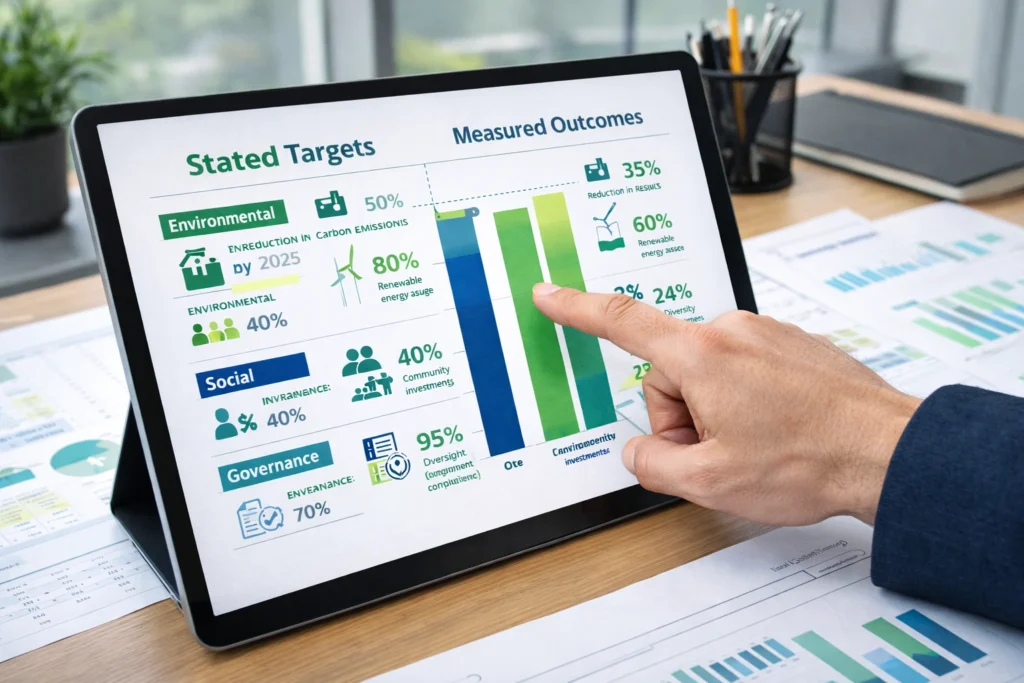
Progress means nothing if you can’t measure it against real outcomes. Still, too many investors collect data but never check if results match expectations.
The fix starts with clear baselines tied to your investment goals. From there, regular reviews show how outcomes stack up against intent. This habit makes raw data useful as verified proof.
The sections below explain how to make sense of what you find.
Measuring Portfolio-Level vs. Company-Level Impact
Monitoring progress works differently depending on the level you focus on. Look at company-level impact first, tracking how a single holding performs against its own targets. Then consider portfolio-level impact, which assesses how all your holdings perform together.
Both views help, but they show different things. Think of your investments as a group. One company in that group might be doing great. But if you only focus on that one, you could miss that the others aren’t keeping up. The same risk applies when you only look at the group as a whole. This way, the struggling ones blend in and go unnoticed.
So how do you avoid this? Start by reviewing individual companies against their stated commitments. After that, zoom out to see how those results add up across your entire investment group. Using both views this way catches blind spots that either one alone would miss.
Bringing in Third-Party Verification
Reviewing your own data is a good start, but it only goes so far. Most of this data comes from companies and fund managers reporting their own results. That’s where third-party verification steps in to add an independent layer that keeps everyone honest.
Think of it like getting a second opinion. Say you believe a company hit its environmental targets based on its report. That sounds promising, but an outside auditor can dig deeper to confirm that those numbers are accurate. And if something doesn’t add up, they’ll catch it before you do.
Independent verification also builds confidence in your findings. After all, results from a neutral source simply carry more trust than self-reported claims. This third-party review adds reliability that proves especially useful when the stakes are high or when a company’s track record is unclear.
So, look for verification from recognized auditors or rating agencies with transparent methods. Their approval means the data passed a credibility test, while a company avoiding outside review altogether sends a warning of its own.
Validating Gains Before Celebrating
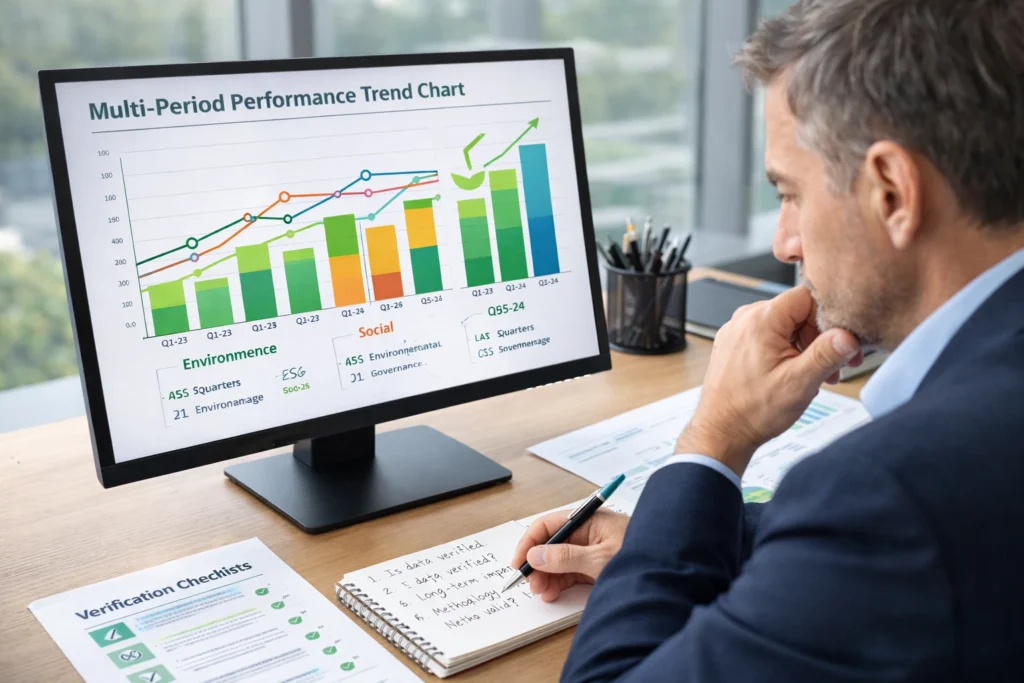
Even with third-party verification in place, positive results deserve a closer look before you call them a win. That’s because a single strong report doesn’t always mean lasting progress. In fact, gains can come from one-time events, favorable market conditions, or changes in how data was measured.
Take time to understand what’s really behind the numbers before celebrating.
Start by asking if the improvement can be repeated. A company might show a significant sales hike, but if that came from selling a factory rather than gaining proper customers or market share. So the gain won’t last.
To verify this, compare current results against previous periods. One good season means nothing in business, but steady improvement over multiple periods tells a stronger story. That consistency is what separates real gains from temporary spikes.
Until you see it, treat early wins as signals to watch, not reasons to relax.
Ready to Measure Real Impact?
Impact investing only works when you can prove your money creates real change. Yet too many investors settle for promises instead of verified results. The good news is that the right tools and methods exist to close that gap.
This guide covered ESG metrics, reliable data sources, standardized frameworks, and consistent tracking systems. It also explained how to monitor progress at both company and portfolio levels, bring in third-party verification, and validate gains before celebrating them.
Social Investment Taskforce helps investors move from guesswork to proof. So don’t settle for promises when you can have evidence. Contact us today and start measuring what counts.