

Did you know the global impact investing market reached $1.57 trillion in 2024, and will increase further by the end of 2026 and onward? That’s a massive amount of money flowing into projects that actually help people.
We’re talking about funding that builds affordable homes, creates jobs in struggling neighborhoods, and opens clinics where families need them most. However, many investors don’t realize their investment choices can directly fund these community solutions.
In this article, we’ll cover how social investment benefits communities, where your money actually goes, and how you can earn financial returns while creating positive change. You’ll learn about different approaches to impact investing and what makes these investments effective.
Let’s break down what impact investing looks like in practice.
What Are Social Investment Benefits for Real Communities?
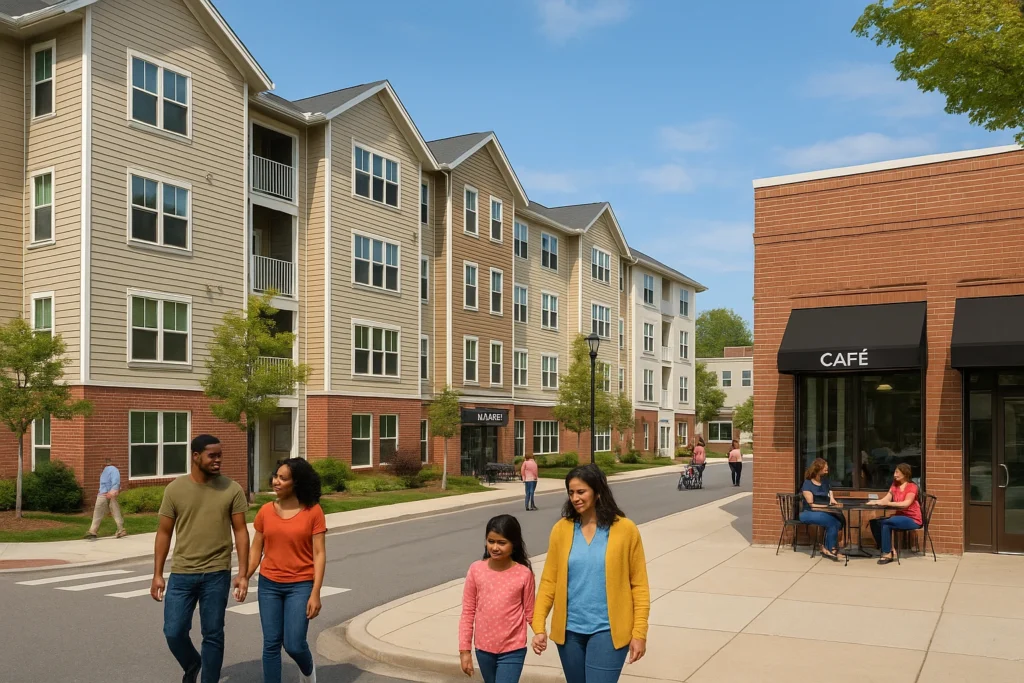
Social investment benefits include funding for affordable housing, job creation programs, healthcare access, and small business development in underserved areas.
Instead of relying on one-off grants, social investment directs capital into community organizations through structured financing, such as loans or equity stakes, that expect repayment over time.
Think of it like this: a community health clinic or affordable housing project receives investment and gradually repays it, just like any other enterprise.
The result is a self-sustaining cycle. When that clinic repays its loan over five years, the same capital funds a job training center next. That center’s repayment then finances a small business hub. One initial investment can multiply across multiple projects without requiring fresh donations each time.
What communities gain is permanent infrastructure: affordable homes, health clinics, and business hubs that serve residents for decades.
This model works because successful social enterprises generate enough revenue to deliver their services while repaying investors. That dual ability removes the constant fundraising pressure that limits traditional nonprofits.
Impact Investing: How Financial Inclusion Reaches Underserved Communities
Impact investing opens doors for people who’ve been shut out of traditional financial systems by providing access to loans, banking services, and investment capital. Investors address this exclusion through three main areas: affordable housing, small business financing, and essential community services.
Building Affordable Housing Through Patient Capital
Patient capital gives housing developers longer repayment timelines so they can build for families earning teacher or nurse salaries rather than high-income professionals. Unlike traditional banks, which usually want repayment within three years, impact investors are willing to wait ten to fifteen years.
Without the pressure to maximize returns immediately, developers can set rents that families already living in the neighborhood can afford. Projects in Philadelphia have created hundreds of homes this way, proving that patient capital makes affordable housing viable.
Supporting Small Businesses in Underserved Areas

Banks often reject loan applications in certain neighborhoods, even when the business plans are solid. They label these markets as risky without understanding them.
However, community lenders see things differently. In our experience, rejection rates drop by half when borrowers receive mentorship alongside their loans. A bakery owner might only need help setting up accounting systems, not just capital.
Once these businesses get started, they hire residents and keep money circulating within the community instead of losing it to large chains.
Expanding Access to Essential Services
Impact investments also fund clinics, childcare centers, and job training programs, services that many neighborhoods lack. These organizations need upfront capital to hire staff and buy equipment long before revenue begins to flow.
With impact funding in place, residents gain access to healthcare, childcare, and skills training that weren’t available before. A working parent shouldn’t have to choose between keeping a job and finding childcare, but that’s the reality in areas without support services.
How Social Investments Deliver Financial Returns
Here’s what trips people up: they assume social impact means sacrificing returns. Well, it doesn’t.
It’s because social investments generate financial returns through loans that pay interest or equity stakes that grow as social enterprises expand. For example, a community development loan might return 3–5% annually, similar to a bond. Alternatively, an equity investment in a social enterprise provides returns as the business scales and increases in value.
On top of financial returns, these investments create social value tracked using Social Return on Investment (SROI). SROI ratios typically range from 2:1 to 8:1.
This means every dollar invested generates $2 to $8 in tangible benefits, such as reduced healthcare costs, higher employment, or improved educational outcomes. These are impacts that traditional ROI calculations don’t capture.
This creates a dual-return model. Impact investors accept moderate financial returns in exchange for verified social outcomes that pure profit-focused investments can’t deliver. You’re earning money, just not at the expense of community impact.
Community Development Through Social and Environmental Solutions
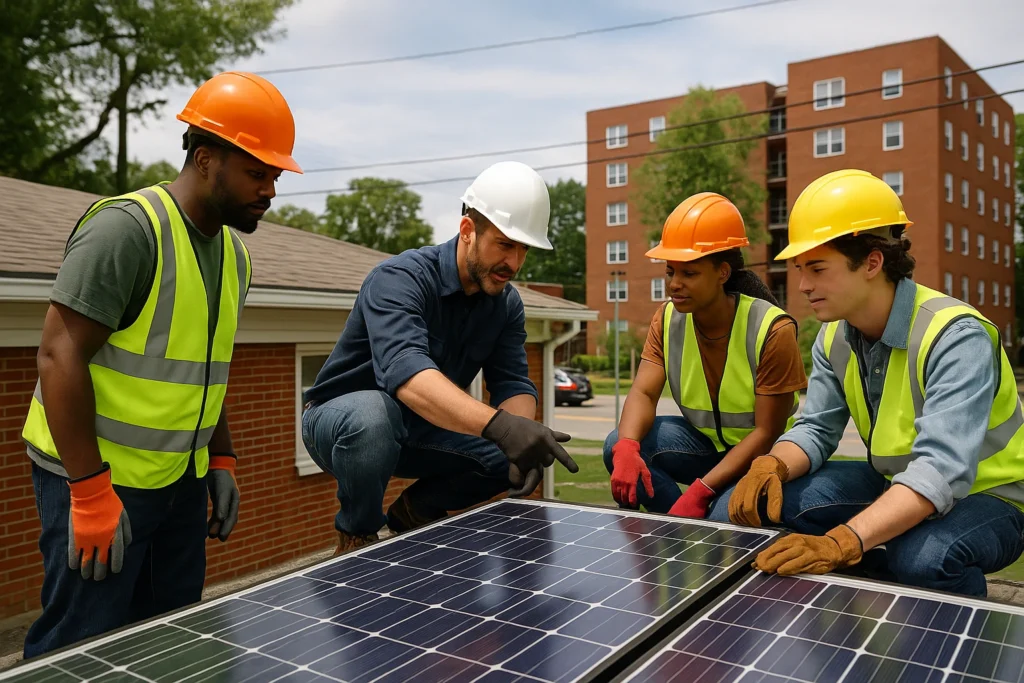
Community development investments solve multiple problems at once, tackling everything from pollution to unemployment in a single project. They usually target three interconnected areas.
- Clean Energy Projects: A solar installation program trains unemployed residents to install panels while cutting carbon emissions and energy costs for low-income families. The training creates careers in a growing field that continues to expand as renewable energy demand rises.
- Workforce Training Programs: These aren’t temporary positions. Green jobs in solar installation, energy efficiency, and sustainable construction pay living wages and grow as the need for environmental solutions increases every year.
- Environmental Improvements: When a neighborhood gets a community garden or green space, residents gain access to fresh food and shared areas that reduce crime, improve mental health, and boost property values.
That’s the beauty of this approach. One investment creates lasting impacts across health, jobs, and the environment without needing separate funding streams for each problem.
Impact Measurement: Tracking the Change You’re Creating
Assume you’ve put money into a community project. Now what? How do you know it’s actually working?
Impact measurement uses specific metrics like jobs created, families housed, or tons of carbon reduced to quantify social results. Organizations report outcomes quarterly or annually, similar to how companies report earnings to shareholders.
What gets measured depends on the project and its goals. A job training program tracks how many graduates land work and what they’re earning six months later. That housing development down the street? It reports occupancy rates and whether rents actually match what local families can afford. These numbers keep everyone honest.
From our work with impact investors, we’ve seen how quarterly reporting catches problems early, before they become deal-breakers. You can see whether your investment is creating the change you signed up for, not just generating nice-sounding reports.
When a clinic shows it’s serving 2,000 patients a year and cutting ER visits by 30%, that’s concrete proof your money is doing something real.
Social Investing vs. Traditional Investing

Social investing prioritizes measurable community impact alongside financial returns, while traditional investing focuses primarily on profit maximization. The two approaches share mechanics like loans and equity, but differ in what they’re trying to achieve.
Let’s take a closer look at how social and traditional investing compare side by side.
| Factor | Social Investing | Traditional Investing |
| Primary Goal | Social impact + financial returns | Maximum financial returns |
| Return Expectations | Moderate (3-8% annually) | Higher (10-15%+ annually) |
| Time Horizon | Longer-term (10-15 years) | Short-term (3-5 years) |
| Risk Assessment | Impact potential weighs heavily | Financial metrics only |
| Success Metrics | Dual: financial + social outcomes | Single: profit performance |
Social investors accept moderate returns over longer periods because these projects need time to build community infrastructure. Traditional investors want higher returns (10-15% ) faster, which pushes investments toward profit maximization over community stability.
Risk profiles look different, too. Social investments often show steadier performance because they’re tied to essential community needs like housing, healthcare, and food access.
These don’t disappear during economic downturns. A community health clinic doesn’t lose patients when the stock market drops. An affordable housing project stays occupied because people always need places to live.
Which approach fits your portfolio depends on what you’re optimizing for. Traditional investing delivers higher financial returns. On the other hand, social investing delivers financial returns plus verified proof that your money is solving real problems in communities that need it.
Ready to Make Your Money Work for Communities?
Social investment creates lasting change through affordable housing, job training programs, healthcare access, and small business growth in underserved communities. You’ve seen how patient capital funds projects that traditional banks won’t touch and how impact measurement tracks real results.
The financial returns are moderate but steady, typically ranging from 3-8% annually. More importantly, you get verified proof that your money is building infrastructure that lasts for decades.
Want to explore social investment options? Visit Social Investment Taskforce to learn more about impact investing opportunities that align your financial goals with community impact.