

Most investment dollars never stay local. They flow into national funds and distant markets, and the neighborhoods they came from see none of it.
A community investment fund redirects that financing into local businesses, residential development, and civic facilities. The goal is concrete: more jobs, broader loan access, and more affordable housing in the districts that need them most.
At Social Investment Taskforce, we connect investors with community development opportunities that deliver financial returns alongside measurable community impact. We’ve worked with investors who’ve used this model to finance shelter projects, small business loans, and neighborhood improvements across urban and rural areas.
This guide covers how community investment funds work, what the CDFI Fund does, and how the new markets tax credit pulls private capital into local economies.
Local Investing: How Pooled Capital Stays Rooted in the Community
Community development finance is the structured mechanism behind how pooled funding reaches the districts banks routinely ignore. These funds direct money toward community-level projects through loans, direct financing, and partnerships with neighborhood organizations. Each dollar stays tied to a defined project, place, and set of measurable targets.
Community investment funds operate through three core mechanics:
- What the Fund Does: The funds collect financing from individual and institutional investors and deploy it into regional economies through loans, equity investments, and grants. Each dollar goes directly into neighborhood businesses, housing, and physical assets in the districts the fund serves.
- How Returns Work: Investors receive financial returns, and the funded districts see direct improvements in employment, housing stock, and local facilities. A CDFI-backed loan to a small manufacturing business in Detroit, for example, can create 15 to 20 jobs within the first operating year. That same loan generates a steady return for the fund throughout its term.
- Who Gets the Capital: These funds focus on low-income communities, economically strained areas, and rural regions that commercial banks have written off entirely. Community investment funds fill the gap with flexible loan terms, lower credit thresholds, and direct community partnerships.
Place-based investing works because money compounds differently when it circulates through a defined area. Every loan repaid becomes a new loan for the next business or resident in the same district. That cycle separates this model from a conventional index fund.
Economic Development: Where Community Investment Funds Put the Money
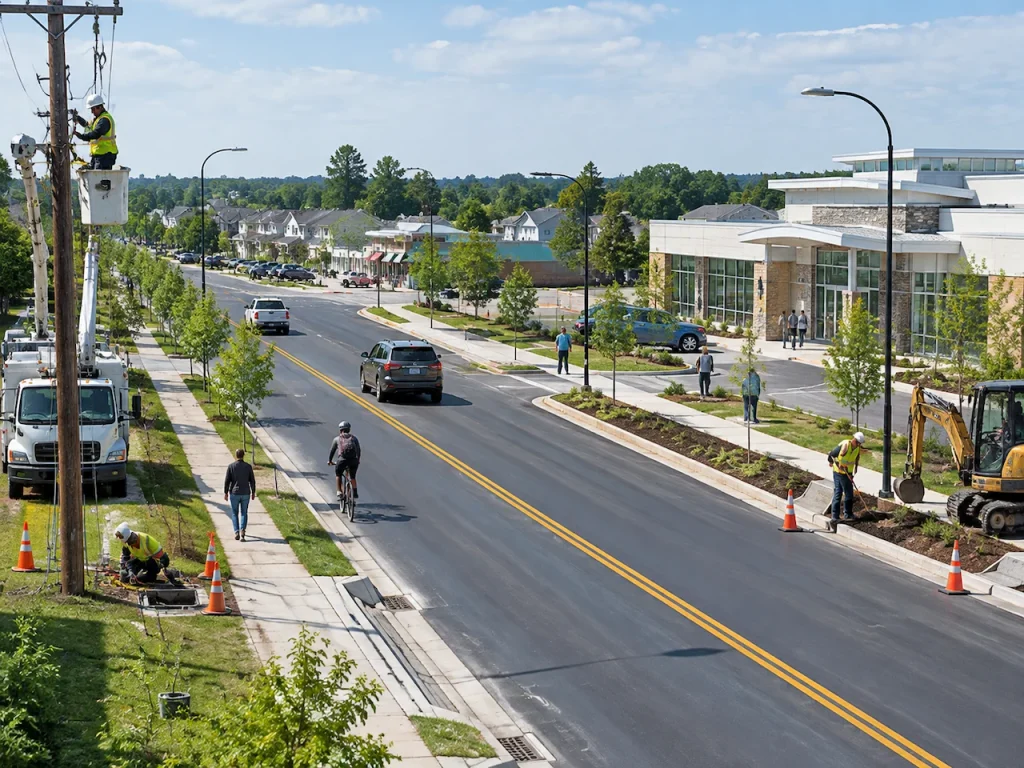
Community investment funds deploy financing across three main areas: small businesses, workforce housing, and community infrastructure (and we mean real infrastructure: roads, clinics, broadband, not just another coffee shop). Each area targets a gap where demand exists but private capital has never followed.
Fund managers evaluate each investment for its job creation potential. From there, specific targets include reduced vacancy rates, expanded employment, and new service coverage for excluded residents.
One of the most productive structures in community-level investment is the revolving loan fund. Each repayment cycle directly backs into a new loan for the next business or project in the surrounding area. That mechanism keeps money working rather than sitting idle between rounds.
Here’s where the bulk of that financing flows first.
Affordable Housing and Community Development: What Gets Funded First
Affordable housing draws the largest share of community investment fund financing. The National Low Income Housing Coalition reported a shortage of 7.3 million affordable units for low-income renters across the US.
More importantly, community development dollars go towards building new units and preserving existing housing stock. That investment also covers the services those projects depend on: childcare centers, health clinics, and neighborhood retail. As a result, families stay connected to the jobs, schools, and support networks they already rely on.
Ultimately, sustained funding in those services creates job stability, which draws broader economic activity into the same areas over time.

What the CDFI Fund Does for Low-Income Communities
Most everyday investors have never heard of the CDFI Fund. It has directed billions into financially excluded neighborhoods over the past 30 years. The US Treasury created it to certify and support community development financial institutions, specialized lenders that operate inside the districts they serve.
CDFIs exist to reach low-income and distressed communities, along with rural areas that standard financial institutions consistently bypass. That focus makes their approach quite different from traditional banking.
Let’s jump in on how CDFIs compare to traditional banks across the factors that affect lower-income borrowers most:
| CDFI | Traditional Bank | |
| Credit Requirements | Flexible, income-based assessment | Strict credit score thresholds |
| Target Borrower | Low-income and distressed communities | Creditworthy individuals and businesses |
| Primary Goal | Community impact alongside financial return | Profit-driven lending |
| Geographic Focus | Under-resourced urban and rural areas | Market-driven locations |
| Loan Structure | Flexible capital with longer terms | Standard fixed terms |
Research on CDFIs and local economic development confirms that these institutions close gaps that standard banks overlook. CDFI-backed borrowers have profiles that fall outside conventional lending standards. According to the Federal Reserve Bank of New York, CDFI industry assets have tripled to over $450 billion since 2018.
How CDFIs Use Flexible Loans to Reach Overlooked Communities
CDFIs reach overlooked areas through flexible capital, local partnerships, and direct outreach that standard lenders never attempt. For example, a CDFI in South Side Chicago or rural Appalachia works alongside community organizations to find borrowers that larger institutions never contact.
It structures financing for excluded small businesses outside typical credit profiles. Borrowers also receive financial education alongside the funding, so they gain both the resources and the tools to use them productively.
Bottom Line: CDFIs have channeled over $222 billion into bypassed communities since 1994. That investment has supported job creation, housing development, and small business growth across urban and rural districts nationwide.

How the New Markets Tax Credit Works in Low-Income Communities
The New Markets Tax Credit gives private investors a 39% federal tax credit spread across seven years. That credit applies directly to financing directed into low-income communities across the country. A vacant storefront in North Philadelphia or an empty lot in rural Kentucky becomes a viable investment target when investors have a real financial incentive to act.
Recent research on community investment funds confirms that targeted tax incentives rank among the most reliable tools for pulling private money into distressed communities. Here is how the New Markets Tax Credit program directs investment into low-income areas:
- How the Credit Works: As we mentioned earlier, investors receive a 39% credit over seven years through community development entities that manage NMTC allocations. Each allocation targets a qualified project in a community that meets CDFI Fund criteria.
- How It Reduces Investor Risk: The 39 % credit covers a defined share of total capital exposure. That reduction makes high-impact projects in under-resourced areas financially viable. A commercial project in an economically strained urban district becomes fundable when the tax credit covers roughly a third of the cost.
- What It Has Delivered: Since 2000, the New Markets Tax Credit has generated over $110 billion across eligible investments in rural and qualifying census tracts nationwide. Those funds have supported job creation, infrastructure upgrades, and small business growth across the country’s most excluded neighborhoods.
The NMTC program pulls additional private financing into the same areas community investment funds already serve. The combined effect shows up in jobs created, buildings occupied, and services those residents can now access.
Social Finance for Overlooked Communities: What Investors Need to Know About Risk
Investors new to place-based financing often ask how these funds hold up when a single project underperforms. The strongest funds don’t rely on any one project. Social finance instruments like community investment funds carry lower liquidity than standard market investments. The funds built to last manage that through diversified exposure across multiple districts and project types.
Across the social finance portfolios we’ve worked with, that diversification is what separates funds with consistent returns from those that struggle.
Here are three ways community investment funds manage risk for local investors:
- Liquidity vs. Actual Risk: Community investment funds typically lock financing for five to ten years. That structure exists because place-based projects need stable, long-term funding to deliver measurable outcomes. A housing development or small business loan can’t perform on a 90-day timeline. Investors who go in knowing this avoid the frustration of comparing these funds to liquid market instruments.
- Diversification Across Projects: Fund managers spread money across multiple project types and geographic areas to reduce exposure. A single fund might hold loans across twelve regional businesses, three affordable housing developments, and two infrastructure projects simultaneously.
- Tiered Investment Options: Many community investment funds offer entry points starting as low as $1,000, which makes place-based investing accessible across different risk tolerance levels. That low threshold means smaller investors can participate in community development projects alongside institutional money.
Across CDFI-backed portfolios, default rates have consistently run below 3 %. That track record reflects what happens when financing is structured around community need rather than credit score. For a broader view, the social investment benefits this model generates across housing, employment, and local economic growth are documented on our site.